Muck & Lake Weed Control - Green & Guaranteed!

Free shipping in USA (lower 48 states), Canada & EU
Muck & Lake Weed Control - Green & Guaranteed!
Free shipping in USA (lower 48 states), Canada & EU
At your waterfront, “muck” and “mud” are often everyday names for the soft, wet bottom underfoot. The name alone does not tell you what is in it—or which product you need. For the soft-bottom access problem our customers describe, LakeMat treats the two terms the same.
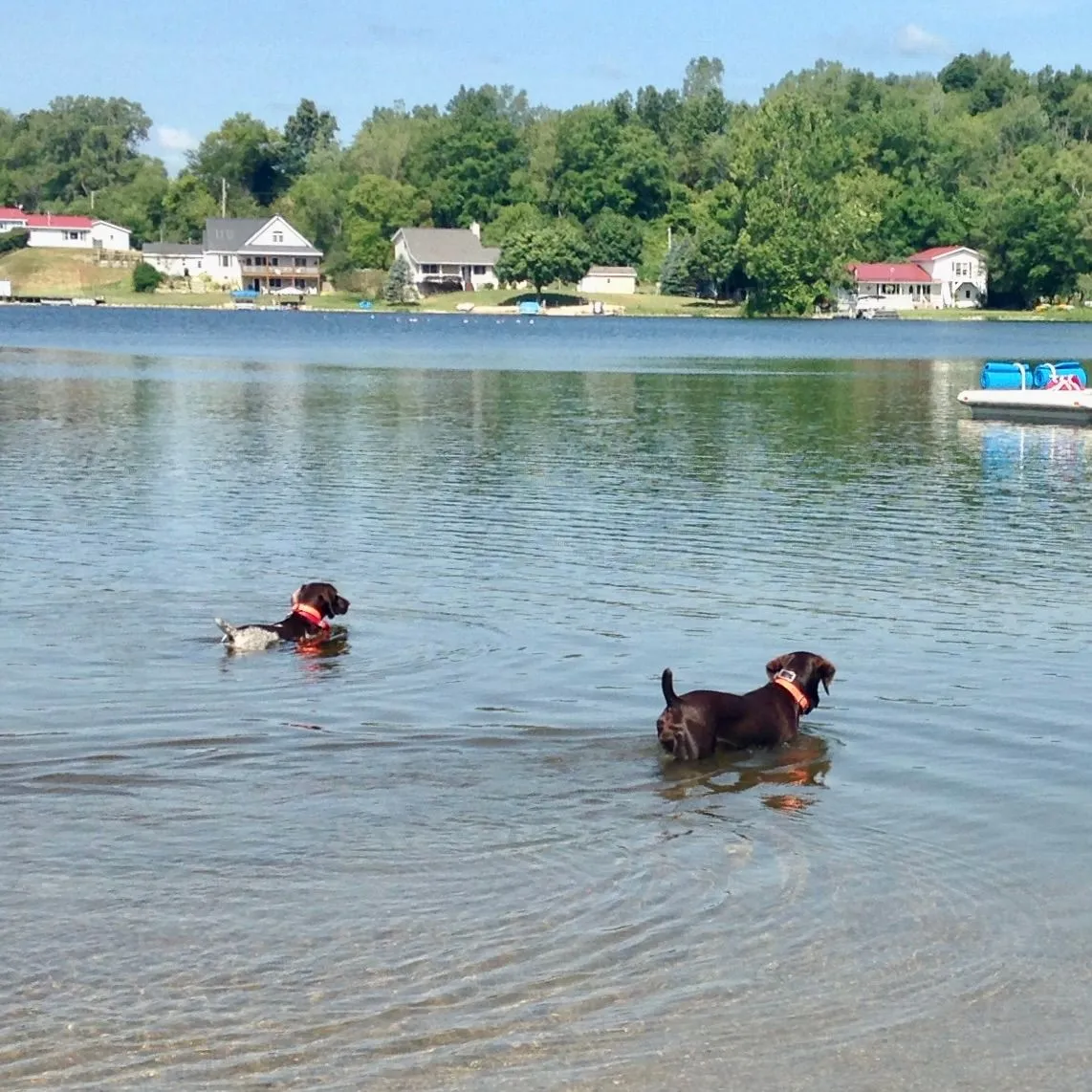
Muck. Mud. That stuff that wants to keep your sandal. Your dog probably does not care what you call it. Your feet might have stronger opinions.
The useful question is what the bottom is doing. Are you sinking? Are weeds getting in the way? Is water staying cloudy? Is the dock settling? Those problems can share a waterfront without sharing the same solution.
Is muck organic and mud mineral?
Not as a reliable rule for shopping for a waterfront mat. People use the words differently, and actual bottom sediment can be a mixture.
Minnesota DNR explains that lake sediments can include material from eroded soil as well as decayed plants and animals. The sediment conditions at a site depend on what has entered and accumulated there. A name used by a neighbor does not measure that mix.
In everyday use, “muck” may make someone think of squishy, accumulated bottom material. “Mud” may make someone think of wet soil. That is useful conversation, not a test result. We would rather ask about your actual problem than sell you a different mat because you chose a different word.
If you are sinking, start with support
Suppose the water looks inviting, but every step off the firm edge feels like the bottom is borrowing your legs. Whether you call that muck or mud, the immediate access problem is a soft surface underfoot.
MuckMat is designed to provide a supported surface over suitable soft lake-bottom sediment. Its frame, fabric and geogrid work together to spread weight across the covered area.
Think giant snowshoe, with better swimming weather.
The sediment remains underneath. MuckMat does not suck it up, dissolve it, or cart it away. It also does not permanently harden every uncovered spot around the mat. Its job is the usable surface in the area it covers.
If you want that distinction in more detail, read what MuckMat does and does not do. Knowing the job is more useful than winning the muck-versus-mud debate at the dock.
If weeds are the problem, ask a different question
A bottom can be firm and still have plenty of plants. It can also be soft and weedy. Those are different starting points.
The first step is to understand the plant issue and the area you want to use. A light-blocking barrier addresses plants in its covered area where that use is appropriate and allowed; it is not a plan to remove vegetation from an entire lake.
Do not assume every aquatic plant is a nuisance or an invasive species. Native plants support fish habitat and other lake functions, as the Minnesota DNR explains. Focus on the access area and follow the rules for your location.
Our mat selector helps distinguish a weed-control need from a soft-bottom support need. That is a better fork in the road than whether someone called the bottom “mud.”
Cloudy water is not the same as a soft place to stand
“Muddy” sometimes describes the water rather than the lakebed. Fine particles suspended in water can reduce clarity, while a soft bottom is a question of what supports you underfoot.
Penn State Extension's water-quality guidance discusses causes of muddy pond water, including runoff and disturbances. A mat selected for access should not be sold as a cure for every water-clarity problem.
If new sediment keeps washing in, addressing its source may be important. If the goal is to remove accumulated sediment and regain depth, that is another project again. Calling all three “muck problems” can hide the difference.
And if the dock is sinking?
A dock wheel disappearing into a soft bottom is a support problem for the dock—not an invitation to use any swimming-area mat under it.
The right setup depends on the dock design, its feet or wheels, the load arrangement and the site. Review DockMat for suitable dock-support applications, and use the dock manufacturer's requirements. Boat lifts have their own support needs, too.
One soft waterfront. Several possible jobs. We like to keep those jobs straight.
What to tell us about your lakefront
You do not need a scientific name for the bottom to start a useful conversation. Tell us where it feels soft, what you want to do in that area, and whether weeds, a dock or a lift are part of the problem.
Water depth, changing water levels, waves and current can matter. So can local rules on covering the bottom or managing plants. A mat that fits one sheltered lakefront is not automatically the answer for every riverbank or exposed site.
From there, we can help narrow the product choice and layout. Follow the instructions and care guidance for your actual mat, and check placement requirements before installing it.
Call it what you like. Let’s work on the lake time.
At LakeMat, muck versus mud is not a reason to make things complicated. For a relevant soft-bottom access problem, we are asking the same practical questions either way.
Tell our family-run team what is happening at your waterfront. If a mat fits the job, we will help you assess the right one. More time enjoying the water is the point. The vocabulary can stay at the picnic table.