Muck & Lake Weed Control - Green & Guaranteed!

Free shipping in USA (lower 48 states), Canada (almost free) & EU
Muck & Lake Weed Control - Green & Guaranteed!
Free shipping in USA (lower 48 states), Canada (almost free) & EU
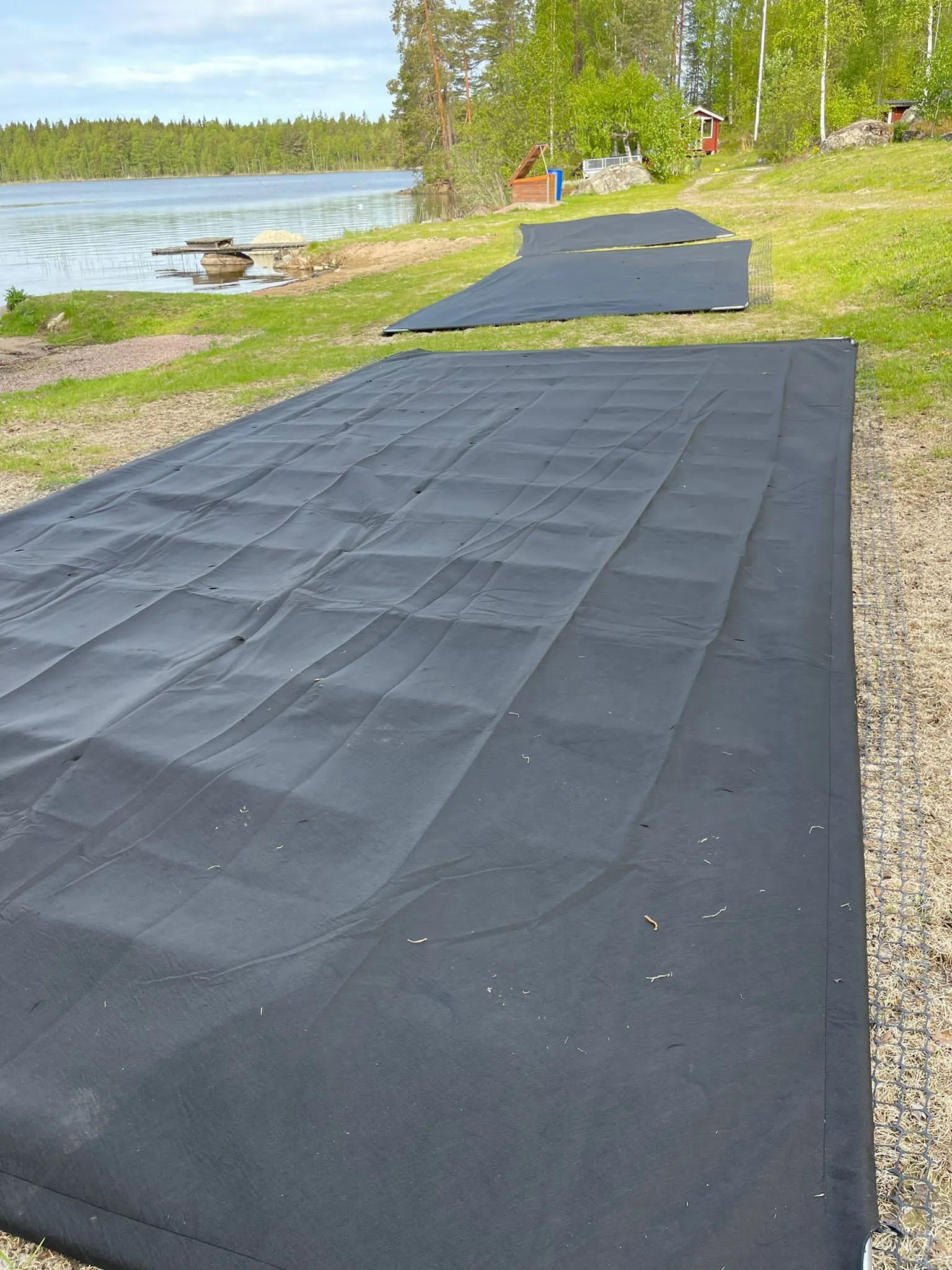
No. MuckMat does not remove muck. It provides a supported surface over soft lake-bottom sediment, so you can use the covered area without asking your feet to do battle with the bottom.
The muck does not pack its bags. We just give you a better place to put your feet.
That distinction matters when you are comparing waterfront products. “Get rid of muck” can mean a firm place to stand, fewer weeds, less organic debris, or actually taking sediment out of a pond. Those are different jobs. Here is the one MuckMat is built to do.
MuckMat works over the muck
MuckMat combines a framed fabric surface with geogrid support. The idea is to spread your weight across a larger area of soft bottom instead of concentrating it beneath each foot.
Think snowshoe. Different season. Considerably less interest in wearing socks.
The mat provides the supported surface; the sediment remains underneath. Move the mat and you have not carried away a layer of lake bottom. That is why a demonstration of someone standing on MuckMat is an access demonstration, not a sediment-removal result.
The fabric also blocks light reaching the covered bottom, which is the weed-control part of the product's job. It does not mean plants throughout the lake disappear, or that floating debris can never land on the mat.
What it changes—and what it leaves alone
MuckMat changes the surface you use in a suitable covered area. That can be useful when the problem is a soft, uncomfortable place to enter the water, stand or spend time at your waterfront.
It does not dredge the lake, restore lost water depth, or remove the source of incoming sediment. It does not permanently harden the uncovered bottom around it. And a swimming-area mat is not automatically the right support for a dock, boat lift or every other load you can dream up.
If your main problem is a sinking dock, start with DockMat information and your dock's actual support arrangement. If the problem is mostly weeds over a firm bottom, another mat may fit. Our mat selector helps separate those uses.
“But I want the muck gone.” What does that mean?
Fair question. It helps to finish that sentence before you buy anything.
“I want to stop sinking when I step into the water.”
That is a support and access question. A suitable MuckMat installation may address the usable surface in the area you want to cover. The important checks are the bottom conditions, the intended activity, the layout and whether placement is permitted at your site.
“I want to reduce accumulated organic debris.”
Biological products target a different job: organic material over time, as described in the retailer's MuckAway study; results and directions depend on the product and conditions.
“I need to remove sediment and recover depth.”
That is sediment management. A support mat does not do it. Penn State Extension's pond assessment guidance discusses sediment accumulation, controlling incoming sediment and the role of dredging. The right plan may involve a pond professional and local permissions, rather than another product for the swimming spot.
Choose the job first. Clear expectations make better lake days.
Muck is not the same recipe at every lake
A soft bottom can include eroded soil and decomposed plant and animal material. Their proportions vary. Minnesota DNR describes these different sediment inputs in its aquatic-plant and sediment guidance.
That is why the actual bottom and the intended use guide the choice. MuckMat supports a covered area over the soft sediment that is there.
Plan the area you actually want to use
Picture the waterfront activity first. Are you entering the water beside the dock? Standing while the kids swim? Reaching the kayak? The useful layout follows that job.
Choose enough suitable coverage for the intended area rather than expecting one small patch to improve all the uncovered bottom around it. Keep native habitat and local rules in the plan, too. Bottom-covering products are regulated differently across locations; check with the relevant local authority before placement.
Use the instructions for your actual mat. Sediment and debris can still settle on top, so follow its care guidance. A supported surface is still part of a real lake, with real stuff moving around in the water.
Less stuck. More lake.
If your goal is a usable surface over soft muck, that is the conversation we want to have. If you need a whole-pond sediment-removal project, we will not call a mat the same thing.
Tell our family-run team about your waterfront: what feels soft, where it happens, and what you want to do there. We can help you assess fit. Or take a closer look at MuckMat—with its real job clearly in mind.