Muck & Lake Weed Control - Green & Guaranteed!

Free shipping in USA (lower 48 states), Canada (almost free) & EU
Muck & Lake Weed Control - Green & Guaranteed!
Free shipping in USA (lower 48 states), Canada (almost free) & EU
The lake came with a view. It wasn’t supposed to come with a weed farm.
If hydrilla or another invasive plant is crowding your swimming or boating space, start with the plant and the place. Different weeds need different treatment choices. Cleaning matters, too: keeping a weed mat clear of buildup is one job; keeping invasive hitchhikers off equipment is another.
A useful plan can include physical removal, a suitable bottom barrier, aquatic herbicides or a managed biological approach. The right mix depends on the species, the waterbody, the area you need to use and what your local rules allow. A mat can be part of that conversation. It isn’t a whole-lake cure.
Why hydrilla and its weedy friends keep coming back
Hydrilla has more going on than the stems you can see. It can spread through broken plant pieces, and it also produces tubers and overwintering buds. That helps explain why clearing the visible growth doesn’t necessarily finish the job. The New York DEC hydrilla fact sheet describes how fragments and other plant material can travel on currents, boats, trailers and fishing gear.
Hydrilla isn’t the only plant with a knack for making itself at home. Eurasian watermilfoil can establish from fragments, and its roots can survive winter. Native watermilfoils can look similar, so “something feathery in the water” isn’t enough to choose a treatment.
Then there’s water hyacinth, an invasive floating plant found in warmer parts of the country. A floating plant presents a different problem from a rooted plant growing up from the bottom. A bottom mat doesn’t catch a floating weed drifting past.
Plenty of aquatic plants are native and useful. The goal is to manage the actual problem, not turn every green thing in the lake into an enemy. If the species is uncertain, ask your state aquatic-plant specialist or extension office before disturbing it.
Choose the treatment for the plant and the place
Think about the space you’re trying to reclaim. A small patch beside a dock, a floating surface tangle and an infestation across a connected lake call for different conversations.
The UF/IFAS aquatic-plant management guide explains why treatment choices must fit the individual waterbody. It also describes the maintenance needs of bottom covers. Its Florida examples help explain the methods; your own state’s rules determine what you may do at your place.
Cleaning job one: keep the mat doing its job
Even a weed mat needs a little housekeeping. No feather duster required.
Sediment can collect on top of a bottom cover. Keeping that buildup in check is part of maintaining the covered area. Our HydrillaMat product and care details recommend multiple in-water cleanings during the growing season for hydrilla. That is product-specific guidance, not a once-a-year rule for every mat and every lake.
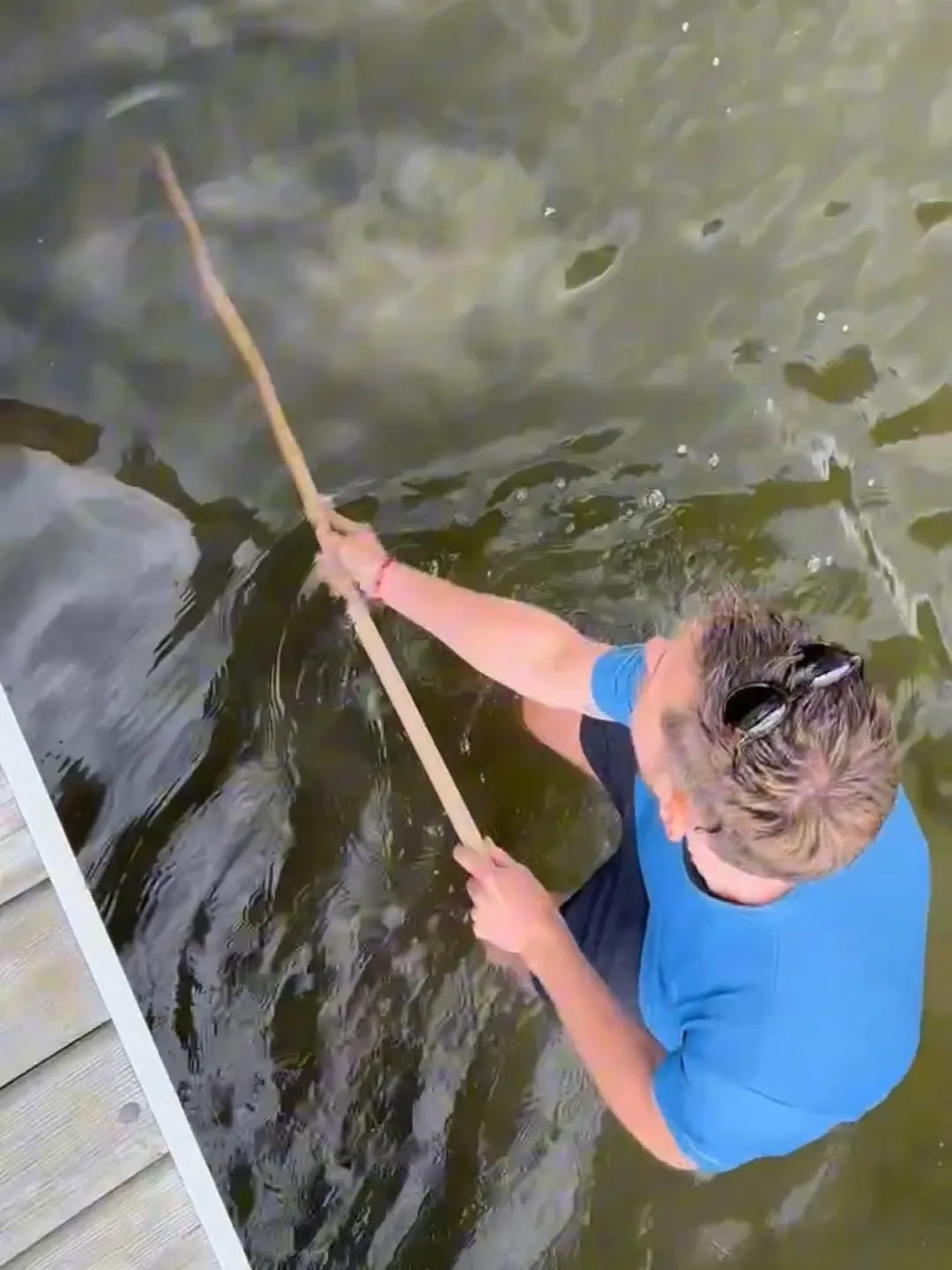
Ask about the correct cleaning method for your model, the amount of buildup and the site’s restrictions. A general brushing demonstration shows what cleaning can look like; it doesn’t establish the right frequency or method for every infestation. Don’t assume pressure washing, jetting or relocating a mat is allowed at your waterbody.
We also wouldn’t promise that one cleaning eliminates every tuber or that a covered patch means the infestation is gone. Keep the treatment goal realistic and follow the management plan for the identified plant.
Cleaning job two: don’t take the weeds to the next lake
Invasive plants are lousy guests. They don’t need a ride home with you.
Before leaving the access, look over the boat, trailer, kayak, fishing gear and other wet equipment. The U.S. Fish & Wildlife Service’s Clean, Drain, Dry guidance calls for removing visible plants, animals and mud, draining water-holding equipment, and drying equipment before reuse. Follow its detailed cleaning guidance, your equipment manufacturer’s instructions and any local decontamination requirements.
Collect removed plant pieces and dispose of them as your local authority directs. Don’t rinse them into another lake, river, ditch or storm drain, and don’t move an infested mat or other equipment between waters without the required cleaning and local authorization.
This cleanup protects the next waterbody. Brushing sediment off a mat already in place serves a different purpose. Both deserve attention; one doesn’t replace the other.
Check local rules, then pick your next step
“No chemicals” doesn’t mean “no rules.” In Minnesota public waters, using lake-bottom barriers to destroy or prevent aquatic-plant growth is listed as an activity that is not allowed. In Michigan, benthic barriers used to cover weeds require a permit; local requirements may apply as well.
Those are two examples, not a nationwide permission slip. Check with the authority responsible for your particular lake, pond or river before buying or installing a barrier, removing plants or arranging treatment. Being riverfront doesn’t establish that a particular mat suits the current, depth or bottom at your site.
If a localized mat approach is allowed, start with our mat selector, or ask LakeMat about the weed problem at your waterfront. Tell us your state, waterbody, the identified plant and the area you want to use. That gives us something useful to work with.
The goal is more lake time and less weed wrestling. Let’s keep the weeds out of the guest list.