Muck & Lake Weed Control - Green & Guaranteed!

Free shipping in USA (lower 48 states), Canada & EU
Muck & Lake Weed Control - Green & Guaranteed!
Free shipping in USA (lower 48 states), Canada & EU
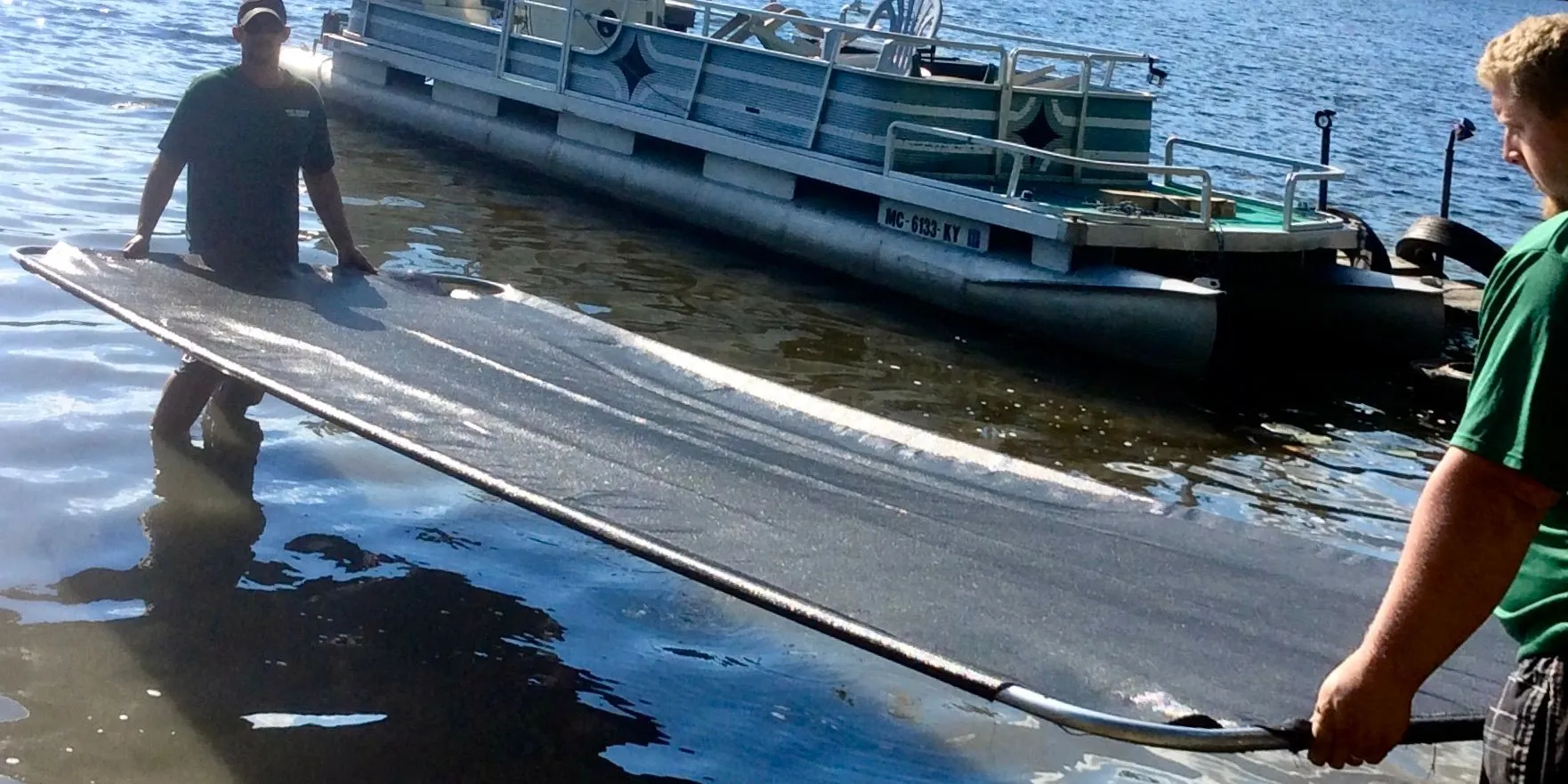
Your dock is supposed to be the easy way to the boat. When the wheels or feet start disappearing into the muck, getting there becomes a whole different lake activity.
A dock sinking into a soft lake bottom needs the right support for that dock and that site. DockMat is a framed support mat designed for suitable roll-in and sectional dock setups. It spreads the load over a larger area of soft bottom instead of asking a small wheel or foot to do all the work.
That is its job. It does not scoop out the muck, turn the lakebed into concrete, or fix a bent dock leg. Here is how to decide whether it belongs in your plan.
First, figure out what is actually sinking
A low corner does not always mean the same thing. A wheel may be settling into soft sediment. A dock foot may be sitting unevenly. A leg might need adjustment, or a connection may need attention. Those situations can look similar from shore, but the fix can be different.
Start with the dock manufacturer's instructions and a look at the condition of its legs, wheels, feet and connections. ShoreMaster's dock installation and removal guide, for example, emphasizes inspecting those components. A mat should be part of a suitable support arrangement, not a way to work around damaged equipment.
If the dock is unstable, keep people off it while you get the support issue assessed. Do not climb underneath a loaded dock or try to lift it out of the bottom by improvising.
How DockMat helps with a mucky bottom
Think about a small dock wheel pressing into a soft bottom. A lot of the dock's load is meeting the lakebed in a fairly small spot. DockMat provides a larger support surface beneath a suitable dock arrangement.
The framed mat uses taut fabric to spread that load. It can also provide a pathway in the appropriate setup. The muck stays underneath; the aim is to keep the supported area from settling the way an unsupported wheel or foot might.
Match the mat to your dock's support arrangement, the bottom and the water conditions. Those details help us find the right fit before you buy.
DockMat, MuckMat and BoatLift Mat have different jobs
The names all live in the same LakeMat family. That does not make them interchangeable.
DockMat: support and pathway uses for suitable dock setups on soft bottom.
MuckMat: a supported surface for people using a soft, mucky waterfront.
BoatLift Mat: a different product family intended for the support needs of suitable boat-lift setups.
If you are dealing with a boat lift as well as the dock, say so when you contact us. “They are both heavy things by the water” is not enough information to choose the same product for both.
Our mat selector separates dock and lift problems from swimming, weeds and other waterfront needs. That is a good place to start if your lakefront has more than one job waiting for it.
Four details that help us find the right fit
1. The dock type and support layout
Is it a roll-in dock, a sectional dock on feet, or something else? Tell us the manufacturer and model if you have them, along with where the wheels or feet sit. We need to understand the load path, not just the overall length of the dock.
2. What the bottom is doing
Describe the trouble you already know about: which supports settle, where the bottom is soft, and whether that changes across the dock area. You do not need to name every grain of sediment. “The shore end is firm but the outside wheels sink” is useful information.
3. Water depth and changing conditions
Water-level changes, waves and current can affect the dock choice and its support arrangement. A product's dock-support purpose does not mean every moving-water or exposed site is suitable. Bring those conditions into the conversation before choosing a mat.
4. The work the dock needs to do
A walkway to a small boat, a busy family swimming dock and a dock alongside a lift can put different demands on a setup. Share the actual use. The goal is a compatible arrangement, not buying the biggest thing by default.
Sometimes the answer starts with the dock itself
Different dock designs suit different waterfronts. Manufacturer-approved feet, wheels or adjustments may be part of the answer. A floating dock may fit some soft-bottom or changing-water sites better than a bottom-supported design; ShoreMaster discusses those conditions in its floating dock FAQs.
DockMat gives you another option to assess for the right setup. It does not replace the dock manufacturer's requirements or a site-specific assessment when the conditions call for one.
A little LakeMat history
Our original DockMat story starts in 2015, when a Texas couple bought the Michigan lake cottage next door to escape the East Texas heat and humidity. Reverse snowbirds, you might say. Their big new roll-in dock met the local muck, and its wheels sank right up to the axle.
The story includes a Michigan-made Chevy pickup helping pull the dock free. That got it out of trouble for the day; it still needed a long-term solution. The team had already developed BoatLift Mat, so the idea was a narrower version for a dock.
At the factory, Christine—the “Queen of All Sewing Machines”—sewed the narrower mat. It was framed, placed in the lake, and the neighbor was delighted. DockMat began with a real neighbor's mucky problem. We still like that kind of practical lakefront thinking.
Get your dock back to doing dock things
Less worrying about a sinking wheel. More walking out to the boat. That is the direction we like.
Contact our family-run LakeMat team with your dock type, support layout and the soft-bottom problem. We will help you work out whether DockMat is the right next step. You can also review the current DockMat product information and installation resources before planning your setup.